Jev collects the context so your coding agent doesn't have to. The author reports 40% lower agent cost, verified on SWE-bench.
 VIDEO
VIDEO0 online0 visits
What are people building with Jev?
55 projects in dev tools, newest first.
Jev collects the context so your coding agent doesn't have to. The author reports 40% lower agent cost, verified on SWE-bench.
VIDEOBeacon gathers sessions from Codex, Claude Code, Cursor and 20+ harnesses; Jev picks the runs worth turning into reusable skills.
 VIDEO
VIDEOBy Lyzr: edit the state and questions live, and compare Jev with OpenAI models side by side on speed and cost.
 VIDEO
VIDEOSame query, same results: Laya on a local AMD GPU answered in 392 ms, the Jev API in 676 ms.
 VIDEO
VIDEOA React site search that re-ranks results with Jev as you type. Playground and repo in the thread.
 VIDEO
VIDEOEvery tool call is judged before it touches your machine: rules block the known-bad in ~40 ms, Jev decides the rest (allow, ask or block).
 VIDEO
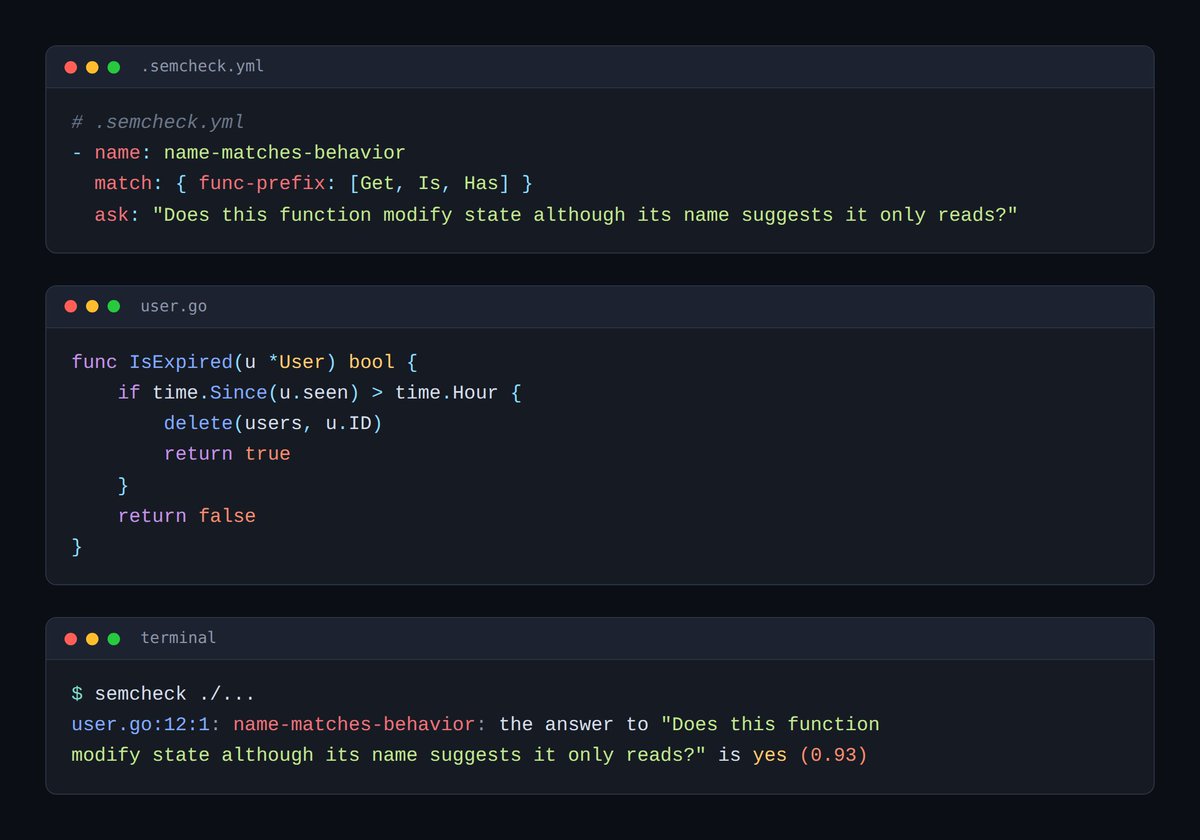
VIDEOStatic analysis picks the code, then Jev answers yes/no checks with a probability, like PII in logs or getters that change state.
 IMAGE
IMAGEMassively parallel browser tests driven by Jev, for pennies per run.
 VIDEO
VIDEOJev replaces the LLM that decides which tool to call, so the agent can act before the user finishes talking.
 VIDEO
VIDEOSend a prompt, workload and quality level; Jev decides which model it needs and how confident that call is, before anything is generated.
 VIDEO
VIDEOPaste a URL: Jev decides how to rebuild the site as a native app, then Shipper submits it to the app stores.
 VIDEO
VIDEOA harness where an agent learns a job, writes a general solution and gets out of the way. Built with pi and Jev.
 VIDEO
VIDEOA cache-aware router that uses Jev to pick the model and reasoning effort for each request, balancing quality, speed and cost.
 VIDEO
VIDEOAn old idea worth another look: a classic rule-based expert system, with Jev answering its questions.
 VIDEO
VIDEOUpload PDFs, docs and URLs once; any MCP client searches them and Jev scores every passage first. If nothing is relevant, it says so.
 VIDEO
VIDEOClassify inputs with choices, scores and booleans, wire the results into other prompts and return custom outputs, all from a UI.
 VIDEO
VIDEOStop defaulting to the biggest model at max effort: Jev picks the model and effort for each request in Codex and Claude Code.
 VIDEO
VIDEOWired into MiniMax H3: Jev scores each layer and picks a 1–10% attention sparsity. On an RTX 4070, 6:07 dropped to 3:34.
 VIDEO
VIDEOClick it on a GitHub PR and ask "should I approve this?": it checks CI, diff size and reviews, then Jev decides in ~200 ms.
 VIDEO
VIDEOJev predicts the next command from your shell history.
 VIDEO
VIDEOJev scores every coding-agent turn against rules that can't be codified and tells the agent what to fix. Open source.
 VIDEO
VIDEOJev went through 3,247 sessions in 40 seconds, caught rage clicks, dead clicks and JS errors, and opened fixes. $2.17. Coming to Flowsery.
 VIDEO
VIDEOAn open-source framework for running end-to-end tests with agents, with Jev making the calls.
 VIDEO
VIDEOJev can't reason, so this interpreter reasons for it: facts and rules are written in English and Jev evaluates each step.
 VIDEO
VIDEO